How To Manage Siding Rot: Forensic Restoration Guide
The presence of wood rot within a residential building envelope indicates a failure of systemic moisture control. This is rarely an isolated event; it acts as a diagnostic indicator of deeper issues within the wall assembly. How To Manage Siding Rot. When moisture penetrates the exterior cladding and remains trapped against structural sheathing or framing members, the environment becomes ideal for fungal colonization. Left unaddressed, this process compromises the load-bearing capacity of the structure and necessitates invasive, large-scale remediation that far exceeds the complexity of the original installation.
Addressing decay requires a fundamental shift from cosmetic patching to mechanical restoration. Homeowners and property managers must view the exterior skin not as a static shield, but as a dynamic component of an assembly tasked with water shedding, air barrier continuity, and vapor diffusion. A failure to recognize the interplay between these layers explains why many common repairs prove ineffective, allowing rot to return or migrate to adjacent bays. True remediation requires identifying the source of moisture infiltration and engineering a solution that facilitates drying before re-closing the wall assembly.
This analysis deconstructs the mechanisms of material decay and provides a technical framework for restoration. It moves past superficial advice to explore the physical, chemical, and structural requirements for a resilient exterior. By prioritizing system-wide moisture management, practitioners ensure that their interventions do not merely mask the symptoms of rot but resolve the conditions that allowed it to thrive.
Understanding “how to manage siding rot”
Professionals tasked with how to manage siding rot must adopt a forensic approach to building science. The most pervasive misunderstanding involves the belief that decay can be halted simply by replacing affected boards and applying fresh paint. This approach ignores the reality that the rot was likely initiated by poor detailing at window openings, lack of flashings, or a failed drainage plane. Without correcting the systemic flaw, the replacement materials will succumb to the same environmental stressors within a short window of time. Oversimplification—such as the assumption that all decay is identical—leads to improper treatment protocols, where surface-level fungal growth is treated as structural rot, or vice versa, causing wasted resources or, more dangerously, ignored structural threats.
The Dynamics of Fungal Colonization
Biological degradation occurs only when moisture content within the wood exceeds the threshold of approximately 20 percent. Once this environment is established, fungal hyphae penetrate the cellular structure of the timber, breaking down cellulose and lignin. This process alters the wood’s density, color, and structural integrity. Managing the environment, therefore, is the only way to stop the process. If a repair does not result in the sustained reduction of moisture content, the decay will continue regardless of how much fungicide or new wood is installed.
Systemic Moisture Ingress
Water often travels long distances behind a facade before manifesting as visible rot. A leak at a roof-to-wall intersection might not show symptoms until water pools on a ledger board three levels down. Forensic moisture mapping, utilizing thermography and resistance meters, is necessary to determine the true origin of the breach. Attempting to repair rot without mapping the moisture pathway is akin to treating a fever without identifying the infection.
Deep Contextual Background of Cladding Evolution
The evolution of building materials has significantly altered the risk profile for decay. Traditional, thick-timber frame construction often possessed enough buffer capacity to handle minor wetting, and its inherent permeability allowed for rapid drying. Modern construction, by contrast, frequently utilizes high-performance, low-permeance synthetic materials, which trap moisture more effectively when poorly detailed. This has created a new class of “hidden” rot that develops inside tightly sealed wall cavities, often progressing significantly before being detected by standard visual inspections.
Conceptual Frameworks for Restoration
The Drying Capacity Model
This framework posits that every assembly must have a capacity to dry that exceeds its capacity to wet. Remediation efforts focus on increasing ventilation behind the cladding, improving drainage at the base of the wall, and reducing the potential for vapor condensation through strategic insulation placement.
The Source Isolation Strategy
This model mandates that the moisture source must be neutralized before any structural repair is finalized. This involves rigorous testing of window flashings, roof interfaces, and sealant performance. The repair is only successful when the “wetting” input is demonstrably stopped.
The Structural Integrity Assessment
When rot is identified, the primary concern is the load-bearing capacity of the remaining timber. This framework requires a phased approach: stabilization of the structure, removal of the compromised material, and the installation of new members that are properly isolated from the moisture-prone environment.
Key Categories of Decay and Restoration Trade-offs
| Decay Type | Primary Cause | Typical Severity | Restoration Difficulty |
| Surface Mold | Humidity/Condensation | Low | Low |
| Soft Rot | Prolonged Wetness | Moderate | Moderate |
| Brown Rot (Dry Rot) | Severe Moisture Trapping | Extreme | High |
| Galvanic Corrosion | Dissimilar Metal Reaction | Moderate | Low |
| Biological Infestation | Organic Debris Accumulation | Moderate | Low |
Making decisions about the best approach requires a realistic assessment of the damaged area. If rot has reached the structural studs, the repair becomes a construction project, not a maintenance task. If it is confined to the cladding substrate, the repair can often be localized, provided the drainage plane is restored.
Forensic Investigation Protocols
Before any material is replaced, the practitioner must document the extent of the damage. This involves removing enough of the exterior and interior finish to see the “path” of the moisture. If the rot is widespread, the assumption should be that the entire affected wall section is compromised.
Structural Stabilization
In cases of advanced structural rot, the building must be supported before the damaged studs or plates are removed. This work requires professional oversight, as it involves the redistribution of building loads. Failure to support the structure during rot removal can lead to settling, cracking, or catastrophic failure.
Detailed Real-World Scenarios How To Manage Siding Rot
The Window Flashing Failure
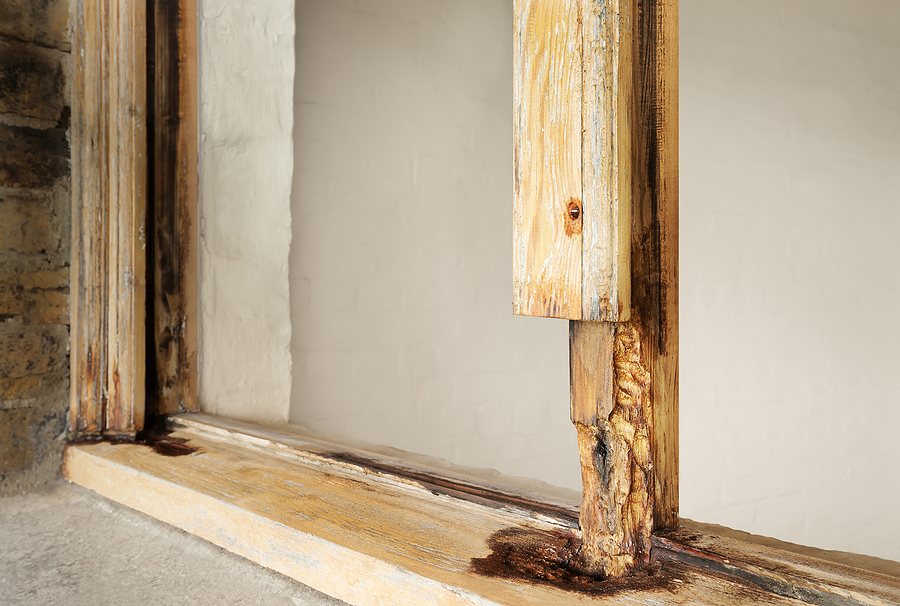
A classic case of decay originates at the sill flashing of a window. If the tape is not properly integrated into the drainage plane, water flows behind the cladding. Managing this requires stripping back the exterior, installing new, properly integrated pan flashing, and ensuring the drainage plane is continuous.
The Roof-to-Wall Intersection
In areas where a roof meets a wall, improper kick-out flashing leads to immense moisture volumes being dumped directly onto the siding. The resulting rot is often severe and hidden. Correction requires the installation of a proper kick-out diverter to lead water away from the wall assembly.
The Improperly Vented Rainscreen
Some assemblies create a “closed” gap that traps moisture rather than venting it. The management strategy here involves opening the base and top of the wall to restore convection and airflow, allowing the trapped humidity to escape.
Planning, Cost, and Resource Dynamics
| Repair Phase | Resource Intensity | Potential for Variability | Impact on Longevity |
| Forensic Mapping | High | Moderate | Critical |
| Structural Stabilization | Very High | High | High |
| Drainage/Flashings | Moderate | Low | Very High |
| Cladding Restoration | Moderate | Low | Moderate |
Resource allocation must prioritize the invisible details. Spending heavily on the highest-grade siding panel is futile if the flashings and drainage plane are not properly engineered and installed.
Tools, Strategies, and Support Systems
-
Infrared Thermography: Used to detect cold spots, which often indicate moisture accumulation or insulation saturation.
-
Capacitance Moisture Meters: Non-destructive tools to track the movement of moisture through wall assemblies.
-
Borescope Inspection: Allowing visual access to wall cavities without full demolition.
-
Structural Repair Epoxies: When removing a full beam is impractical, specialized consolidants can sometimes reinforce partially compromised sections under strict guidance.
Risk Landscape and Failure Modes
The primary risk is the “compounding failure.” Rot weakens a wall, which then allows for further moisture ingress, which accelerates the decay. This cycle can turn a local issue into a multi-bay structural failure within a few seasons. Practitioners must be vigilant for signs of secondary damage, such as rusted connectors or pest infestation attracted to decaying wood.
Governance, Maintenance, and Long-Term Adaptation
Once the rot is addressed, the management of the exterior must move to a preventive phase. This includes bi-annual inspections focusing on sealant integrity and gutter performance. Vegetation must be kept at least two feet away from exterior walls to ensure proper evaporation. Review cycles should re-evaluate the building’s condition after the first heavy rainfall season to ensure all repairs are holding.
Measurement, Tracking, and Evaluation
-
Leading Indicators: Low moisture content readings in the wall cavity during high-humidity periods.
-
Lagging Indicators: Total absence of new fungal growth or structural settlement.
-
Documentation Example: The “Envelope Restoration Ledger,” which maps where the rot was found, what systemic flaw caused it, and the date the drainage plane was verified.
Common Misconceptions and Oversimplifications
-
Myth: “Painting over rot stops it.” Correction: Paint traps moisture, often accelerating the internal rot rate.
-
Myth: “Rot is only a problem in the Pacific Northwest.” Correction: Decay occurs wherever moisture and temperature reach the threshold for fungal growth.
-
Myth: “All wood is equally rot-prone.” Correction: Heartwood in specific species has natural decay resistance, but all wood eventually fails in a wet, poorly designed assembly.
Conclusion
Understanding how to manage siding rot is essentially the practice of forensic building science. It demands that the practitioner look beyond the visible surface to the underlying causes of moisture imbalance. By systematically identifying the source of infiltration, removing compromised material, and restoring a continuous, ventilated drainage plane, the integrity of the home can be secured. The goal is not merely to repair, but to evolve the building envelope into a system that proactively sheds water and facilitates drying, ensuring long-term resilience against the elements.