How to Plan Siding Replacement on a Budget: Affordable Exterior Guide
Exterior renovation projects frequently introduce severe financial stress for property owners. Cladding systems degrade continuously over decades of exposure to harsh environmental conditions. Eventually, the necessity of full envelope renewal becomes impossible to ignore. How to Plan Siding Replacement on a Budget. Navigating this transition without exhausting financial resources requires strategic foresight and rigorous planning.
Balancing immediate capital constraints against long-term structural durability remains a central challenge. Property owners frequently fall into the trap of prioritizing the lowest initial bid. This shortsighted focus often results in compounding systemic failures down the road. True fiscal efficiency requires analyzing lifecycle expenditures alongside initial material acquisition costs.
Executing a successful exterior overhaul demands an analytical approach to project sequencing. Every phase of disassembly, surface preparation, and product integration presents hidden fiscal variables. A well-constructed strategy uncovers these hidden dynamics before demolition begins. This definitive guide outlines the technical and operational frameworks required to manage costs effectively.
Understanding how to plan siding replacement on a budget
Mastering how to plan siding replacement on a budget involves an objective evaluation of cost-containment strategies. True budgeting is not merely a matter of selecting cheap materials or cutting essential installation steps. Instead, it requires a comprehensive understanding of where value can be optimized without undermining structural safety. Property owners must analyze the complete building envelope to determine which components require immediate replacement and which can be safely preserved.
Oversimplification remains a primary driver of financial overruns during exterior renovations. Many individuals assume that material costs dictate the bulk of the project budget. In reality, labor dynamics, site disposal fees, and unexpected structural repairs often account for more than half of the total expenditure. Forgetting to account for these secondary variables can quickly dismantle an otherwise sound financial plan. A nuanced strategy balances upfront affordability with long-term operational resilience.
Deep Contextual Background and Historical Trends
The economics of residential exterior cladding have undergone dramatic transformations over the past century. Historically, regional material availability dictated the financial viability of home exteriors. Affluent urban areas relied heavily on masonry or local old-growth timber, which required intensive maintenance but offered immense longevity. The development of synthetic building materials during the post-war era democratized home remodeling by introducing low-cost alternatives.
The Democratization of Materials
The introduction of aluminum and early polymer systems shifted consumer expectations toward lower upfront costs. These initial synthetic products often suffered from aesthetic limitations and rapid weathering, necessitating frequent updates. As manufacturing technology matured, engineered composites and high-performance polymers emerged as viable mid-tier options. Modern market conditions require balancing these diverse material histories against fluctuating global supply chains and localized labor shortages.
Conceptual Frameworks and Mental Models
Navigating complex financial decisions during a renovation is made easier by applying structured economic models. The Lifecycle Costing Framework evaluates materials based on their total cost of ownership over a thirty-year horizon. This model factors in original purchase price, recurring finishing costs, and expected lifespan. Utilizing this framework reveals that slightly higher initial material investments can yield substantial long-term savings.
The Value Optimization Matrix
The Value Optimization Matrix helps property owners classify project components into non-negotiable structural elements and discretionary aesthetic upgrades. Weatherproof barriers, flashing systems, and high-quality fasteners are classified as critical performance assets. Conversely, premium color palettes, complex trim profiles, and accent textures are designated as flexible options. This classification ensures that financial cuts never compromise the building envelope’s core protective functions.
The Phased Remediation Strategy
When capital is severely restricted, the Phased Remediation Strategy offers a viable path forward. This model breaks down a full-scale replacement into smaller, manageable geographic increments over several fiscal years. The most heavily weathered elevations, typically the south and west faces, are prioritized during the initial phase. Protecting the most vulnerable zones first allows property owners to distribute financial burdens safely over time.
Key Categories, Materials, and Practical Variations
Selecting an affordable cladding material involves navigating a dense landscape of trade-offs and performance characteristics. Polyvinyl chloride remains the dominant budget option due to its low baseline cost and minimal finishing requirements. Fiber cement occupies a higher pricing tier but provides exceptional fire resistance and traditional visual appeal. Engineered wood composites offer an alternative balance of structural rigidity and ease of installation.
Analyzing Material Economics
Every material category carries hidden operational expenses that impact the overall project budget. For instance, while fiber cement panels are reasonably priced, their high weight increases shipping costs and labor installation times. Premium polymers may feature a higher material price tag but install rapidly, significantly reducing labor outlays.
| Material Class | Baseline Material Cost | Labor Complexity | Maintenance Frequency | Expected Lifespan |
| Standard Vinyl Lap | Low | Low | Very Low | 20–25 Years |
| Engineered Wood | Medium | Medium | Medium | 30–40 Years |
| Fiber Cement | Medium-High | High | Medium | 50+ Years |
| Traditional Cedar Shingle | High | Extreme | High | 30–40 Years |
Selection Logic Sequences
A logical selection process filters materials through an analysis of local climate realities and neighborhood standards. Homeowners must first consult local zoning laws and homeowners association regulations to eliminate non-compliant profiles. Next, environmental stressors like high humidity or extreme UV exposure are evaluated to rule out materials prone to rapid degradation. Finally, available financial resources are applied to the remaining options to select the most durable choice.
Detailed Real-World Project Scenarios How to Plan Siding Replacement on a Budget
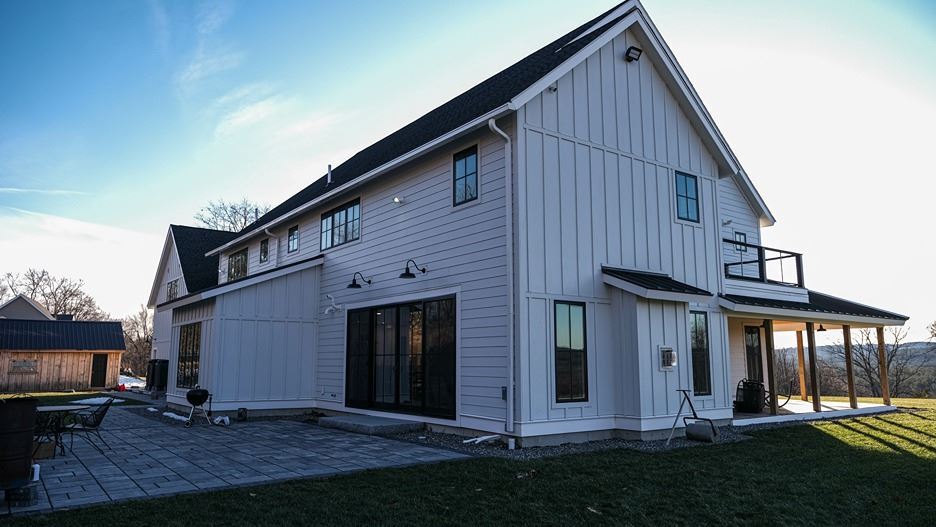
Analyzing real-world applications highlights how specific constraints alter financial outcomes on the job site. A standard suburban home requires standard lap siding replacement on a fixed budget. The owner opts for a mid-grade vinyl panel but discovers significant underlying sheathing rot upon stripping the old boards. This scenario demonstrates why a robust contingency fund must be integrated directly into the original economic plan.
The Severe Climate Modification
A coastal home facing high wind-driven rain requires an exterior upgrade under strict financial parameters. Standard fastening schedules are insufficient for these high-exposure environments, necessitating enhanced ring-shank nails and heavy-duty starter strips. The owner balances these non-negotiable structural costs by choosing a standard color palette and avoiding complex architectural trim pieces.
The Historical District Compromise
Renovating a home within a designated historic preservation zone presents unique financial hurdles. Synthetic materials are frequently banned, forcing owners toward authentic wood or specialized fiber cement profiles. To maintain a strict budget, the property owner acts as their own project manager, sourcing materials directly from regional mills and hiring specialized carpenters solely for the installation phase.
Planning, Cost, and Resource Dynamics
Accurate financial projection relies on separating direct material expenses from indirect job site costs. Direct costs include panels, trim profiles, starter strips, and continuous weather barriers. Indirect expenses encompass scaffolding rentals, waste disposal container fees, and municipal permitting costs. Forgetting to account for these secondary outlays often leads to severe budget inflation before the first panel is hung.
Capital Allocation Dynamics
| Budget Sector | Resource Allocation | Core Cost Drivers | Optimization Strategy |
| Core Substrate Prep | 15% – 20% | Plywood costs, flashing tape | Fix only structural damage |
| Primary Cladding Material | 30% – 40% | Brand selection, thickness | Select standard stock profiles |
| Labor and Management | 35% – 45% | Crew size, installation time | Schedule during off-peak seasons |
| Site Clean-up and Waste | 5% – 10% | Dumpster fees, recycling | Haul waste independently if able |
Tools, Strategies, and Support Systems
Executing a budget-friendly exterior upgrade relies heavily on deploying specific strategic tools. Digital estimation software allows homeowners to accurately map wall areas, reducing material waste factors to under five percent. Utilizing electronic moisture meters ensures the underlying framing is perfectly dry before sealing the wall system. Simple hand tools like vinyl unlocking levers enable spot repairs on salvageable wall sections, avoiding full replacement.
Operational Efficiency Strategies
Scheduling construction during the late autumn or winter months often yields substantial labor discounts, as contractor backlogs naturally diminish. Sourcing materials from local wholesale distribution centers eliminates retail markups and reduces transport fees. Ordering full pallet quantities prevents unexpected mid-project shortages that disrupt labor continuity.
Risk Landscape and Failure Modes
Budget-driven projects are uniquely vulnerable to specific operational and structural failure modes. Choosing sub-standard house wrap or low-grade flashing tapes creates pathways for hidden moisture entry. Over-tightening fasteners to speed up production leads to severe panel buckling during summer thermal cycles. These compounded errors often nullify any initial savings within the first twenty-four months of service.
Governance, Maintenance, and Long-Term Adaptation
Preserving a budget-friendly exterior envelope requires a disciplined approach to long-term property governance. Homeowners must commit to biannual visual inspections of all wall faces, tracking panel alignment and sealant degradation. Clearing debris from base weep holes ensures that internal moisture can always escape freely. Addressing minor seal failures promptly prevents them from evolving into costly structural remediation tasks.
The Property Lifecycle Checklist
-
Check lower starter tracks for signs of insect nesting or mechanical damage.
-
Evaluate caulking joints around windows for flexibility and adhesion retention.
-
Monitor south-facing walls for subtle color shifting or thermal distortion.
-
Clean surface grime using low-pressure garden hoses to preserve factory coatings.
Measurement, Tracking, and Evaluation Metrics
Tracking project performance involves establishing clear qualitative and quantitative milestones. Leading indicators include maintaining steady daily material consumption rates and keeping waste margins under the estimated threshold. Lagging indicators manifest years later as stable utility costs, which confirm the effectiveness of the new integrated insulation layers.
Quality Control Documentation Formats
Contractors must maintain a centralized log of all hidden flashing details before cladding covers the framing. Recording the exact ambient temperature during vinyl installation ensures gap calculations conform strictly to manufacturer specifications. These permanent records protect the property owner’s warranty rights over the lifespan of the system.
Common Misconceptions and Oversimplifications
A persistent myth suggests that the thickest siding panels always deliver the highest overall value. Panel thickness merely provides rigidity; it does not compensate for poor fastening techniques or inadequate weather barriers. Another common oversimplification is that homeowners can easily execute a full-scale siding replacement as a basic weekend DIY project. Exterior renovation requires specialized mechanical skills and safety equipment that take years to master.
Clarifying Performance Myths
-
Myth: Lowering material costs always yields the lowest total project expenditure.
-
Reality: Cheap materials often demand complex labor methods or frequent maintenance, driving up lifetime costs.
-
Myth: New siding completely fixes existing internal moisture and rot problems.
-
Reality: Cladding merely covers the surface; underlying structural rot must be mechanically cut out and replaced.
Ethical, Practical, and Contextual Considerations
Material selection carries direct ethical responsibilities regarding resource consumption and environmental waste management. Stripping old petroleum-based panels creates massive volume pressures for regional landfill systems. Responsible planning involves seeking out recycling centers that specialize in processing post-consumer building plastics. Furthermore, ensuring fair wages for installation crews directly correlates with higher craftsmanship standards and reduced job site accidents.
Architectural Context
Renovations must respect the surrounding neighborhood’s visual history and scale. Installing overly modern, cheap synthetic profiles in an area defined by classic masonry can lower broader community value. Striking a balance between personal financial limits and collective aesthetic context remains a core duty of every property owner.
Conclusion
Successfully executing an exterior renovation within strict financial boundaries requires a commitment to analytical planning over cheap shortcuts. Protecting the structural integrity of the home must always take precedence over purely cosmetic enhancements. Understanding how to plan siding replacement on a budget enables property owners to achieve an optimal balance of cost efficiency and long-term durability. Precision engineering and disciplined resource management ensure the home remains secure for future decades.