Siding Maintenance Guide: Premium Residential Cladding Care
The integrity of a residential building envelope depends heavily on the continuous performance of its outermost shield. While architectural discussions often focus on initial material selection and structural style, the long-term reality of home preservation is governed entirely by post-occupancy care. Siding Maintenance Guide. Cladding systems face non-stop exposure to environmental forces, including solar radiation, wind-driven rain, and seasonal temperature shifts. Over looking these stresses guarantees that even the most expensive exterior installation will suffer premature failure, threatening the underlying structural framing.
Modern exterior assemblies are highly complex systems that combine multiple layers of building science. Contemporary designs frequently use mixed-material surfaces, minimal roof overhangs, and continuous exterior insulation. These design elements eliminate historic structural protections like deep eaves, placing a heavy performance burden directly on the cladding surface and its drainage channels. Consequently, building upkeep can no longer be treated as a simple, periodic cosmetic wash. It must function as a disciplined, technical management strategy.
Navigating the long-term care of these diverse materials requires a thorough understanding of material chemistry and structural physics. Different exterior solutions, ranging from advanced concrete composites to thermally altered woods, react uniquely to local environmental stressors. A maintenance strategy that works perfectly for one material can cause severe structural damage if applied to another. This definitive reference article establishes a comprehensive framework for managing, inspecting, and preserving premium residential cladding systems over decades of exposure.
Understanding siding maintenance guide
An effective siding maintenance guide must dismantle the common assumption that modern exterior building materials are completely hands-off. The real estate market frequently uses misleading terms like “maintenance-free” to describe synthetic or composite cladding options. This inaccurate labeling leads homeowners to skip basic inspections, resulting in hidden water intrusion and major structural rot behind the panels. Real-world property care requires assessing every cladding material through its specific chemistry, fastening mechanics, and environmental exposure limits.
Systemic Oversimplification Risks
Oversimplifying exterior asset management creates significant risks for custom modern residential homes. A frequent mistake is treating maintenance as an isolated task, rather than managing the facade as part of an integrated, multi-layered wall network. For instance, washing a high-pressure laminate panel seems straightforward, but using excessive water pressure can destroy the flexible expansion sealants at critical window joints. Property care must balance surface cleaning requirements with the physical preservation of the underlying flashing channels and weather-resistive barriers.
Material Performance Variations
Every cladding formulation possesses a distinct chemical profile that dictates how it degrades under environmental stress. Polyvinyl chloride shifts into a brittle state when temperatures drop below freezing, while natural timber swells and shrinks based on seasonal humidity gradients. A uniform maintenance approach ignores these unique behaviors, risking early system failure. True building preservation matches inspection schedules and cleaning techniques with the specific physical properties of the chosen cladding material.
The Role of Atmospheric Deposition
The accumulation of airborne pollutants alters the chemical stability of exterior surface finishes. Industrial soot, coastal salt spray, and agricultural fertilizers create a reactive layer on cladding panels that accelerates ultraviolet degradation. Left unmanaged, these chemical deposits break down factory coatings, triggering premature color fading and surface chalking. Regular tracking and targeted cleaning are mandatory to neutralize these invisible corrosive threats before they cause permanent material breakdown.
Deep Contextual Background and Evolution
The history of residential cladding care in the United States reflects a continuous transition from basic organic treatments to highly technical material preservation. Early American building methods relied almost exclusively on local timber species like old-growth cedar, cypress, or redwood. These ancient trees contained high amounts of natural oils and dense cell structures that provided built-in defense against rot and insect attacks. Upkeep for these traditional structures was simple, consisting of periodic coatings of raw linseed oil or basic lime wash.
The Industrialization Era
The twentieth-century depletion of old-growth forests forced the building sector to rely on younger, lower-grade softwoods. This younger wood lacked natural chemical defenses and structural stability, warping and rotting quickly when exposed to consistent moisture. To protect these vulnerable wood boards, chemical companies engineered heavy lead-based paints and synthetic stains designed to seal the timber completely. This shift changed home maintenance from basic oil treatments to complex multi-step scraping, priming, and repainting cycles.
The Influx of Synthetic Building Skins
The mid-twentieth century introduced affordable alternative cladding materials like aluminum siding and thin vinyl extrusions. These synthetic products were marketed as permanent solutions to the high costs of wood painting and maintenance.
However, these early synthetic systems introduced new structural challenges. While the plastic panels did not rot, their loose-hung installation channels frequently trapped water behind the siding, causing hidden structural rot in the wood framing underneath.
The Modern Rainscreen Era
The development of modern rainscreen engineering radically transformed how architects design and maintain home exteriors. Building scientists realized that no exterior cladding material can keep water out completely over its entire lifespan. Modern installations accept this reality by integrating a dedicated ventilation space behind the cladding panels, creating a clear drainage path for moisture. Modern asset management focuses on preserving this hidden ventilation cavity, ensuring the wall assembly can dry out quickly after major storms.
Climate Adaptation and Maintenance
Accelerating changes in global weather patterns are forcing building managers to re-evaluate historical maintenance schedules. Arid regions face longer periods of extreme heat that accelerate the drying and cracking of perimeter caulking joints. Conversely, coastal areas experience more frequent severe storms that push wind-driven rain deep into structural wall joints. Modern home preservation must adapt to these shifting regional realities, using data-driven inspection schedules to catch climate-related wear early.
Conceptual Frameworks and Mental Models
Developing a resilient strategy for preserving a home’s exterior requires applying structured engineering and thermodynamic frameworks. These mental models allow inspectors to look past surface aesthetics and evaluate the hidden physical forces acting on the wall assembly.
The Hydrophobic Boundary Model
The Hydrophobic Boundary Model categorizes building surfaces by their capacity to repel or absorb liquid water. Materials like coated aluminum are completely non-porous, keeping water on the outer surface where it can drain away via gravity. Conversely, concrete aggregates and natural timbers are porous structures that draw moisture deep into their cell networks through capillary action. Maintenance teams use this model to identify when porous panels require a fresh coat of water-repellent sealer to prevent water retention.
The Thermal Movement Lifecycle Framework
Every exterior material changes its physical length when exposed to temperature shifts, a process governed by its specific expansion coefficient. The Thermal Movement Lifecycle Framework tracks the physical stress placed on fasteners and joints as panels expand and contract over seasonal cycles. A twelve-foot vinyl or composite plank can expand up to three-quarters of an inch between winter lows and summer peaks. This framework guides inspectors to check joint gaps regularly, ensuring adjacent panels are not binding, buckling, or pulling away from the wall studs.
The Ultraviolet Photodegradation Cycle
Solar radiation acts as a continuous chemical stressor on exterior surfaces, breaking down the molecular bonds of paints, stains, and polymers. The Ultraviolet Photodegradation Cycle maps how this sun exposure gradually erodes the protective capstock of cladding panels over time. The first stage shows as a loss of surface gloss, followed by color fading, and eventually surface chalking as the resin matrix breaks down.
Using this framework helps maintenance teams apply fresh protective coatings before the underlying material suffers permanent embrittlement.
The Capillary Action Drainage Model
Moisture movement behind cladding panels follows precise laws of fluid mechanics. The Capillary Action Drainage Model analyzes how water behaves when trapped in the narrow spaces between siding panels and the weather barrier. Without a physical air gap to break surface tension, liquid water is drawn upward and sideways against gravitational forces. This model requires keeping bottom weep holes and flashing slots clear, allowing gravity to pull water out before capillary draw can move it into the home’s framing.
Key Categories, Materials, and Practical Variations
The North American housing market utilizes several primary material categories for exterior cladding, each requiring unique maintenance techniques, tools, and schedules.
Thermally Modified Timbers
Thermally modified wood undergoes a high-temperature kiln process in an oxygen-depleted environment that permanently alters its cellular structure. This process cooks away the natural starches and sugars within the wood cells, removing the food source needed for rot fungi and insects to survive. While these boards are highly stable and resist rot, they remain vulnerable to ultraviolet bleaching, turning a silvery-gray color if left untreated. Maintenance involves applying periodic applications of specialized UV-blocking oils to preserve the wood’s warm natural tones.
Premium Polyvinyl Chloride Extrusions
Modern vinyl siding consists of a co-extruded dual-layer plastic profile designed to provide low-maintenance performance at an affordable price point. The outer layer contains acrylic modifiers and titanium dioxide to resist sun damage, while the inner core utilizes calcium carbonate for structural stiffness. The main maintenance requirement is periodic low-pressure washing to remove environmental soot, mold, and pollen that collect on the plastic surface. High-pressure washing must be avoided, as it can force water through the loose-hung horizontal panel locks and saturate the wall cavity.
Autoclaved Fiber Cement Panels
Advanced fiber cement combines Portland cement, silica sand, and cellulose wood fibers cured under intense hydraulic pressure and high-temperature steam. This dense material offers excellent fire resistance and structural stability, but it relies heavily on its exterior paint coating to prevent water absorption. Over time, freeze-thaw cycles can cause minor hairline cracks along exposed panel edges or caulked butt joints. Maintenance focuses on checking these high-stress joints annually, applying premium elastomeric sealants and fresh acrylic paint to keep water from penetrating the concrete matrix.
Architectural Grade Metallurgy Systems
Premium metal enclosures use coated aluminum, zinc, copper, or weathering steel to create clean, sharp lines and durable modern shapes. Aluminum panels feature durable factory-applied fluoropolymer coatings that resist fading and chalking for decades without requiring repainting. Zinc and copper systems are completely self-healing, developing a natural oxide patina that shields the raw underlying metal from environmental corrosion. Maintenance is minimal, requiring low-pressure rinsing in covered areas where natural rain cannot wash away accumulated atmospheric salts.
High-Pressure Phenolic Resin Laminates
High-Pressure Laminates (HPL) consist of natural wood fibers saturated with thermosetting phenolic resins, compressed under intense heat and pressure. The resulting solid-core panels are waterproof, graffiti-resistant, and highly stable, making them ideal for modern open-joint rainscreen designs. Maintenance is straightforward because the non-porous surface prevents stains and dirt from bonding with the material. Upkeep focuses on verifying that the open horizontal and vertical joints remain clear of organic debris like twigs or leaves that could block airflow behind the panels.
Composite Poly-Ash Planks
Poly-ash cladding blends coal fly ash with advanced polyurethane polymers to create highly durable exterior planks that mimic traditional wood trim. This composite material is completely immune to water absorption, allowing it to be painted dark colors without risking structural warping or splitting. Maintenance is similar to painted wood but requires much longer periods between repainting cycles because the material does not expand and contract with humidity changes. Upkeep involves checking the condition of the exterior acrylic paint and washing away surface dirt every few seasons.
Cladding Upkeep and Material Maintenance Requirements
| Material Category | Primary Upkeep Priority | Cleaning Solution Constraint | Inspection Triggers | Expected Lifetime |
| Thermally Modified Wood | Periodic UV-oil application | Avoid harsh bleach mixes | Check for surface silvering | 40+ Years |
| Premium Vinyl Siding | Low-pressure surface wash | Avoid acetone or solvents | Check for loose panels | 35+ Years |
| Autoclaved Fiber Cement | Joint sealant monitoring | Use neutral pH soaps | Check for edge cracking | 50+ Years |
| Coated Aluminum Alloy | Atmospheric salt removal | Avoid wire abrasive brushes | Check for finish scratches | 60+ Years |
| High-Pressure Laminate | Open joint clearing | Use standard water spray | Check for clip movement | 50+ Years |
| Poly-Ash Composite | Exterior paint monitoring | Use soft bristle brushes | Check for paint flaking | 40+ Years |
Decision Logic for Property Managers
Selecting the correct maintenance approach requires looking past surface appearance to evaluate the specific engineering limits of the cladding material. For example, if a home features an open-joint HPL system, using high-pressure water sprays will drive water deep into the internal drainage cavity, potentially overwhelming the weather barrier. Conversely, a solid fiber cement facade needs consistent monitoring of its perimeter caulked joints to prevent water from soaking into the panel edges. Property managers must align their maintenance tools and schedules with the exact mechanical vulnerabilities of their specific cladding category.
Detailed Real-World Maintenance Scenarios Siding Maintenance Guide
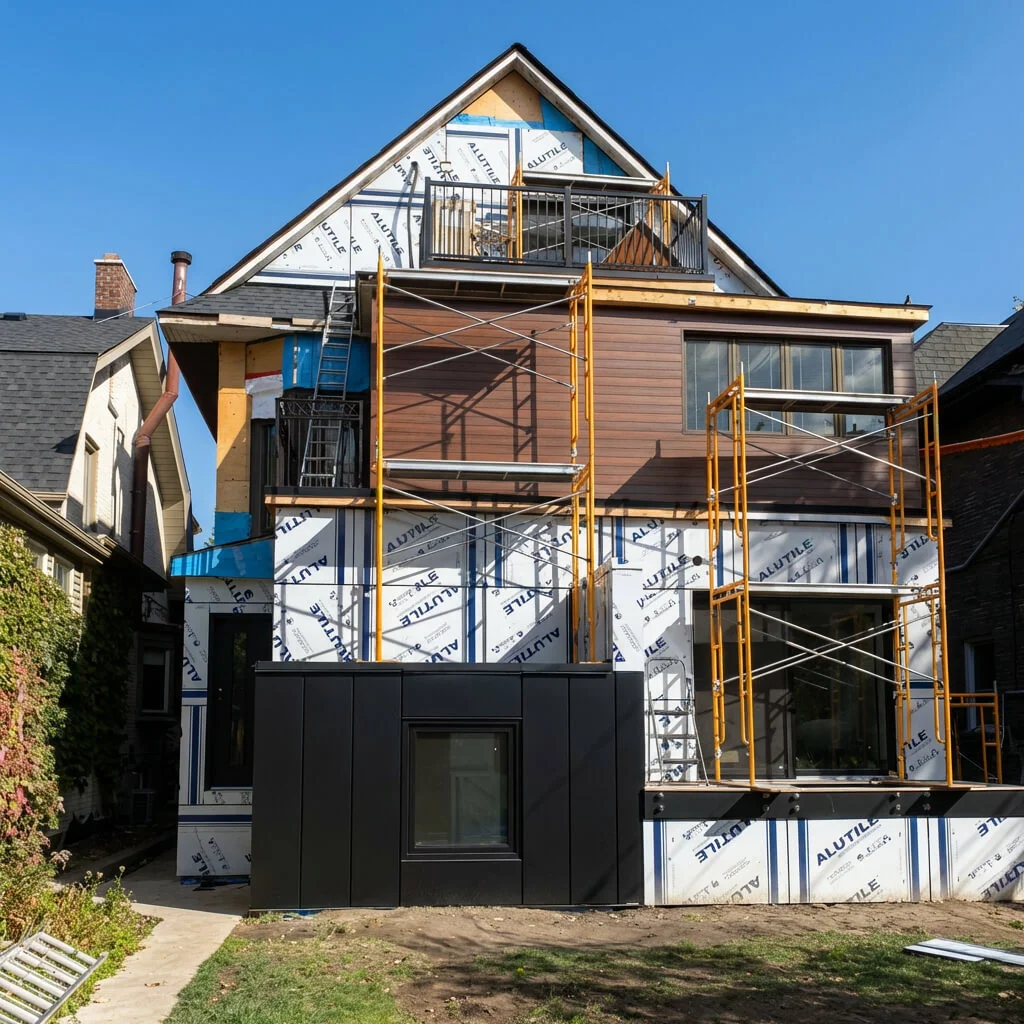
Analyzing real-world property management challenges demonstrates how local regional climates alter the maintenance needs of the home exterior.
Scenario 1: The Pacific Northwest Maritime Coast
A modern residential estate located near the coast of western Oregon features a mixed-material facade of thermally modified cedar and autoclaved fiber cement panels. The home experiences near-continuous rainfall for nine months of the year, combined with low solar drying potential and high humidity.
-
Environmental Factors: Continuous rainfall, high risk of organic moss growth, and low natural evaporation.
-
Maintenance Decisions: The property manager avoids using standard power washers, which can drive moisture past panel joints. Instead, the team applies a specialized, non-toxic biocide solution using low-pressure garden sprayers to kill moss spores safely.
-
Failure Modes: Neglecting the lower drainage flashing allows moss and pine needles to plug the rainscreen weep slots. This blockage traps moisture inside the wall cavity, causing structural mold to grow on the plywood sheathing.
-
Second-Order Effects: Keeping the drainage channels clear allows continuous airflow behind the panels, ensuring the wall stays dry and preventing interior mold growth.
Scenario 2: The Desert Southwest Sunbelt
A minimalist residence constructed in Scottsdale, Arizona, utilizes a combination of pre-finished dark aluminum panels and solid cellular PVC trim profiles. The exterior faces intense summer temperatures, high ultraviolet radiation, and blowing sand storms.
-
Environmental Factors: High UV degradation, extreme summer heat up to 115°F, and abrasive dust storms.
-
Maintenance Decisions: The maintenance team schedules inspections for late autumn after the extreme summer heat has passed. They focus on evaluating the condition of the flexible perimeter silicone joints, which can dry out and crack under intense heat.
-
Failure Modes: Using low-grade, standard acrylic caulking causes the joints to fail within two seasons under the desert sun. This cracking allows sand and rain to enter the open wall expansion seams.
-
Second-Order Effects: Specifying premium, high-movement polyisobutylene sealants keeps the joints flexible, allowing the aluminum panels to expand safely during hot summer afternoons.
Scenario 3: The Northeast Freeze-Thaw Environment
A luxury suburban home in upstate New York features lap fiber cement siding finished with a premium factory coating system. The building experiences humid, wet summers followed by sub-zero winter temperatures and heavy snow accumulation along the lower foundation walls.
-
Environmental Factors: Sub-zero winters, heavy snow pack contact, and frequent seasonal temperature shifts.
-
Maintenance Decisions: Every spring, the property manager checks the lower three siding planks for signs of freeze-thaw damage caused by melting snow blankets. They apply a fresh coat of hydrophobic sealer to any exposed cement edges.
-
Failure Modes: If the lower siding boards are installed too close to the ground, they can absorb moisture from melting snow. This trapped water freezes solid at night, expanding and causing the bottom edges of the cement panels to flake and crack.
-
Second-Order Effects: Maintaining a safe eight-inch clearance between the siding and the ground protects the cement panels from moisture absorption, prolonging the lifespan of the factory paint.
Scenario 4: The Gulf Coast Hurricane Corridor
A multi-story contemporary home located near Biloxi, Mississippi, utilizes a heavy-gauge vinyl siding system with reinforced double-walled locking tracks. The building faces high humidity, extreme summer heat, and periodic tropical storm impacts.
-
Environmental Factors: High wind loads up to 140 mph, high humidity, and intense coastal salt deposition.
-
Maintenance Decisions: Before the summer hurricane season starts, inspectors check the integrity of the horizontal locking tracks. They ensure every panel can slide freely within its tracks, preventing wind from ripping loose panels off the house.
-
Failure Modes: Driving installation nails tight into the siding slots locks the plastic panels in place. When summer heat causes the panels to expand, the restricted plastic buckles, creating gaps that wind-driven rain can easily penetrate.
-
Second-Order Effects: Ensuring the panels are hung loose allows them to slide naturally during thermal shifts, keeping the locking tracks secure and wind-resistant during tropical storms.
Planning, Cost, and Resource Dynamics
Accurate financial planning for an exterior maintenance program requires separating immediate operational expenses from long-term capital replacement costs. Property owners frequently make the mistake of choosing cladding materials based solely on cheap initial purchase prices, ignoring the high recurring maintenance fees that accumulate over time.
Lifecycle Maintenance Economics
Direct maintenance costs cover immediate needs like specialized cleaning solutions, premium sealant tubes, fresh paint buckets, and certified labor. Indirect costs include scaffolding rentals for multi-story homes, safety equipment installations, and landscape protection tarps. Opportunity costs must also be factored in; selecting a high-maintenance material like un-modified softwoods drains home improvement budgets that could otherwise be spent on high-efficiency windows or interior upgrades.
30-Year Cladding Maintenance and Lifecycle Capital Dynamics
| Cladding System Type | Annual Cleaning Cost | Sealant Review Cycle | 10-Year Coating Cost | 30-Year Total Upkeep |
| Thermally Modified Wood | $200 – $400 | Every 3 Years | $2,500 (UV-Oiling) | $9,500 – $14,500 |
| Premium Vinyl Siding | $150 – $300 | Every 5 Years | $0 (No Paint Needed) | $4,500 – $7,000 |
| Autoclaved Fiber Cement | $200 – $350 | Every 2 Years | $4,500 (Repainting) | $12,000 – $18,000 |
| Coated Aluminum Alloy | $100 – $250 | Every 4 Years | $0 (Factory Coated) | $3,500 – $6,000 |
| High-Pressure Laminate | $100 – $200 | Every 6 Years | $0 (Resin Sealed) | $3,000 – $5,500 |
| Poly-Ash Composite | $150 – $300 | Every 3 Years | $3,500 (Repainting) | $9,000 – $13,500 |
Tools, Strategies, and Support Systems
Executing a high-performing cladding maintenance program relies on precise specialized tools, proper safety hardware, and smart layout strategies on the job site.
Precision Diagnostic and Inspection Electronics
Handheld infrared thermography cameras are used during peak summer and winter months to scan the exterior facade for energy leaks. These thermal scans can pinpoint areas of hidden moisture or missing insulation behind the siding without damaging the wall. Digital pinless moisture meters check framing dryness around window corners, catching minor leaks before they trigger structural wood rot.
Material Processing and Application Systems
Calibrated pneumatic sealant guns deliver a consistent, uniform bead of silicone into open joints, ensuring complete adhesion without gaps. Soft-bristle wash poles fitted with low-pressure flow regulators apply cleaning solutions evenly across fragile panels without scratching factory finishes.
Site Protection and Safety Access Equipment
Adjustable scaffolding towers fitted with rubber-padded standoff brackets allow workers to access upper stories safely without denting soft cladding panels. Heavy-duty canvas landscape tents cover sensitive garden beds, protecting expensive plants from chemical runoff during cleaning cycles.
Digital Tracking and Management Systems
Cloud-based asset management software allows property managers to log inspection notes, attach thermal scan photos, and schedule maintenance alerts. This digital history protects home value by proving to future buyers that the exterior envelope was maintained to manufacturer specifications.
Risk Landscape and Failure Modes
Understanding the specific failure paths of different cladding materials allows property managers to implement preventive strategies before minor wear turns into structural damage.
Hydrostatic Pressure Accumulation
Washing exterior cladding with high-pressure commercial power washers can force water past horizontal panel overlaps and joint gaskets. This high-pressure water gets driven deep into the internal wall cavity, soaking the underlying weather barrier.
Without a clear air gap to accelerate drying, this trapped moisture leads to hidden structural mold and wood rot.
Elastomeric Sealant Adhesion Failure
Perimeter joints around windows and doors rely on flexible silicone or polyurethane caulking to seal out wind-driven rain. Over time, continuous ultraviolet exposure and seasonal thermal movement cause these sealants to lose their elasticity, tearing away from the panel edges. These tiny shoreline cracks create a path where rainwater can bypass the cladding layer and enter the home’s framing.
Carbonation and Spalling Decay
When the outer paint layer on fiber cement panels degrades, raw concrete is left exposed to atmospheric carbon dioxide and rain. This exposure triggers a chemical process called carbonation, which lowers the pH of the concrete matrix and causes it to lose strength. During winter, moisture enters these weakened pores and expands as it freezes, causing the concrete surface to flake, crack, and break apart.
Galvanic Fastener Breakdown
Using non-matching metal fasteners, like installing aluminum trim channels with standard carbon steel screws, triggers galvanic corrosion. When moisture bridges these distinct metals, a small electrical charge degrades the weaker metal. This chemical breakdown eats away the fastener threads, eventually causing cladding panels to sag, rattle, and detach during windstorms.
Governance, Maintenance, and Long-Term Adaptation
Preserving a high-performance building envelope requires consistent management and structured upkeep routines over the entire lifespan of the home.
Bi-Annual Field Inspection Routines
Property managers should conduct thorough exterior walk-throughs twice a year, ideally in early spring and late autumn. These inspections focus on identifying wind-loosened trim pieces, checking that bottom weep holes remain clear of debris, and verifying that panels can slide freely within their tracks.
Multi-Layered Asset Protection Checklist
-
Confirm that lower flashing tracks remain completely clear of landscaping mulch, soil, and fallen leaves.
-
Inspect structural silicone sealant joints around window and door trim packages for minor cracks or signs of drying.
-
Verify that lawn sprinklers are angled away from the house to prevent hard-water mineral stains from baking onto panels.
-
Examine areas beneath Low-E windows to catch early signs of solar heat distortion before panels melt or warp.
-
Wash away accumulated atmospheric soot, pollen, and surface mold using soft-bristle brushes and low-pressure garden hoses.
-
Document any surface color changes or chalking using calibrated photography for future warranty reviews.
Measurement, Tracking, and Evaluation Metrics
Evaluating the performance of a home exterior involves tracking a combination of clear qualitative and quantitative indicators over multiple seasons.
Leading vs. Lagging Performance Signals
Property managers must balance leading indicators—like tracking changes in sealant flexibility or measuring cavity humidity levels—with lagging indicators like visible paint flaking or interior drywall stains. Catching shifts in leading indicators allows maintenance teams to fix minor issues before they turn into expensive structural repairs.
Operational Performance Workflows
Contractors should maintain a field log detailing the ambient temperature and joint gaps used during inspections. This historical record protects homeowners during future warranty reviews by proving the work met manufacturer installation standards.
Common Misconceptions and Oversimplifications
The residential housing market contains several persistent myths regarding the performance, longevity, and maintenance of exterior cladding systems.
-
Myth: Modern synthetic siding panels are completely maintenance-free and never require cleaning or inspection.
-
Reality: Atmospheric soot, pollen, and mold collect on plastic surfaces, requiring periodic low-pressure washing to prevent permanent staining.
-
Myth: Using high-pressure commercial power washers is the fastest, most effective way to clean a home exterior.
-
Reality: High pressure forces water past panel joints, soaking the wall insulation and encouraging hidden structural mold.
-
Myth: Caulking every open joint and panel overlap creates a watertight seal that protects the home from leaks.
-
Reality: Sealing drainage tracks and weep holes traps water inside the wall cavity, causing rapid wood rot.
-
Myth: Thermally modified wood requires the same frequent scraping and repainting cycles as standard pine siding.
-
Reality: Modified wood is highly stable and resists rot naturally, requiring only light oiling to preserve its color.
-
Myth: Factory-applied cladding finishes last forever and never require inspection or touch-ups.
-
Reality: Ultraviolet radiation gradually erodes all coatings, making annual color and chalking checks mandatory.
-
Myth: Minor surface mold or mildew on siding is purely a cosmetic issue that does not damage the material.
-
Reality: Organic growth roots into porous coatings, breaking down the protective resin matrix over time.
Ethical, Practical, and Contextual Considerations
Choosing maintenance materials carries direct ethical and environmental responsibilities that modern property managers must evaluate. Using harsh chemical cleaners or high-strength bleach mixes can wash into local soils, contaminating groundwater and damaging surrounding landscaping. High-performance asset management focuses on utilizing biodegradable, neutral-pH soaps that break down safely without harming the local environment.
Property choices also impact the visual harmony of the surrounding neighborhood. Neglecting an exterior facade allows peeling paint, mold streaks, and sagging panels to lower surrounding property values. Striking a careful balance between personal budget goals and broader community preservation remains a core responsibility of responsible homeowners.
Conclusion
Building a resilient home exterior requires looking past surface aesthetics to master the foundational laws of building science. A balanced siding maintenance guide shows that modern facades offer durable performance only when supported by structured inspection routines and proper cleaning techniques. Investing in precise craftsmanship, premium sealants, and clear drainage tracks protects homes from severe weather damage over decades of exposure. Ultimately, true construction quality relies on treating the exterior skin as an engineered system, ensuring long-term structural health, energy efficiency, and peace of mind for homeowners.